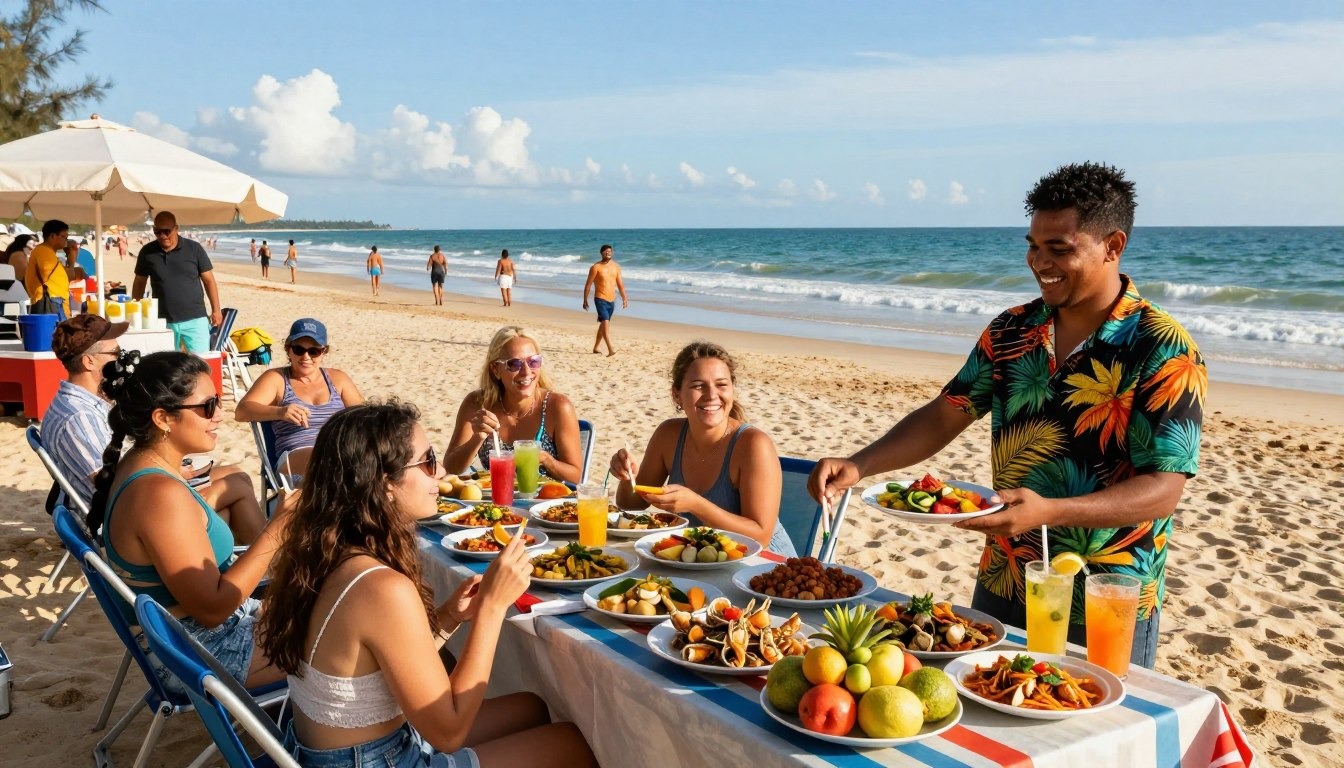
Exploring the idea of a beach food business in 2025 is exciting. It’s key to know what affects daily earnings and profits.
Beach Food Stall Income 2025
The beach food stall industry faces many costs and legal rules. These can change how much money you make. Knowing these can help new owners make smart choices.
This article will cover important points about beach food entrepreneurship. It will help you understand the potential of starting a beach food stall.
Key Takeaways
- Understanding daily earnings and costs associated with running a beach food stall.
- Examining the legal requirements for operating a beach food business.
- Forecasting the potential income of a beach food stall in 2025.
- Identifying key factors that influence the profitability of a beach food stall.
- Outlining the essential steps for starting a successful beach food entrepreneurship venture.
The Booming Beach Food Market in 2025
In 2025, the beach food industry is booming. Rising seaside tourism and changing consumer tastes have opened up new opportunities. Beach food stalls are now thriving.
Current Market Trends and Growth Projections
The beach food market is moving towards healthier and sustainable choices. People want fresh, local ingredients and unique dining experiences. Beach food business forecasts show an 8% annual growth for the next three years.
Why Beach Food Stalls Are Profitable Ventures
Beach food stalls are a great business idea. They have low startup costs and high demand. With the right spot and menu, seaside vendors can make a lot of money during tourist season. The secret to success is knowing what customers want and adjusting to the seasons.
Key Success Factors for Coastal Food Entrepreneurs
To win in the beach food market, focus on quality, service, and marketing. Building a strong brand and using social media can help a lot. Knowing how to make money from coastal food stall earnings projections helps plan better.
Choosing the Perfect Beach Location for Maximum Profit
The success of your beach food stall depends a lot on where you set up. The right spot can really boost your seaside vendor revenue. It’s important to think about several things before you start.
How to Evaluate High-Traffic vs. Exclusive Beach Locations
Choosing a beach spot means considering the good and bad of busy versus quiet areas. Busy beaches draw more people, which could mean more sales for you. But, they also cost more and have more competition.
Seasonal Considerations for Different Coastal Regions
Knowing when people visit different beaches is key to making more money. Some beaches are always busy, while others have seasons. Learning about local tourism can help you plan for busy and slow times.
Analyzing Proximity to Amenities and Attractions
Being close to things people like to do can bring more customers. Look for spots near fun beach activities or places tourists like to go.
Foot Traffic Analysis Methods
- Watch how many people walk by during busy times
- Use apps to count foot traffic
- Ask people what they like to see in a food stall
Competition Mapping Techniques
| Competitor | Location | Menu Offerings |
| Beach Snacks | North Beach | Ice cream, snacks |
| Coastal Cuisine | South Beach | Seafood, salads |
By looking at these points and using tools like foot traffic analysis and competition maps, you can pick a spot that makes you the most money.
Crafting a Profitable Menu for Beach Customers
To make more money, beach food sellers need to create menus that appeal to their customers. A good menu is key to drawing in and keeping customers at beach food stalls.
Top-Selling Beach Food Items in 2025
In 2025, beach visitors will love food that’s tasty, cool, and simple to eat. Some top picks might include:
- Grilled seafood skewers
- Refreshing salads and fruit bowls
- Gourmet burgers and sandwiches
- Specialty ice creams and cold drinks
Developing Pricing Strategies for Maximum Profit
Setting the right prices is vital. It’s about finding a balance between what it costs to make the food and what customers are willing to pay.
Key pricing factors include:
- Food costs and portion sizes
- Looking at what others charge
- Setting profit goals
Balancing Variety and Operational Efficiency
A menu with too many options can be hard to manage and cost more. It’s important to offer enough variety to please many customers without making things too complicated.
Food Cost Calculation Guide
To stay profitable, it’s crucial to accurately figure out food costs. Here’s a simple guide:
| Ingredient | Cost per Unit | Quantity Used | Total Cost |
| Fresh Fish | $10/lb | 2 lbs | $20 |
| Buns and Sides | $2/unit | 10 units | $20 |
| Total | $40 |
By planning menus and prices carefully, beach food stalls can boost their profits and win over loyal customers.
Initial Investment Breakdown for Beach Food Stalls
Starting a beach food business needs careful planning and a big upfront investment. Knowing the costs is key for making smart choices and ensuring your business makes money.
Essential Equipment and Setup Costs
The first step is buying the right equipment and setting up your stall. You’ll need commercial-grade cooking equipment, refrigerators, point-of-sale systems, and utensils. Prices can be from $10,000 to $50,000, based on your stall’s size and needs.
Experts say, “High-quality equipment may cost more at first, but it saves money in the long run.”
“The right equipment is the backbone of any successful food business, even on a beach.” –
Food Truck Empire
Permits and Licensing Expenses
Getting the right permits and licenses is also a big expense. You’ll need health permits, business licenses, and maybe special event permits. Costs vary by location, but plan to spend $1,000 to $5,000.
Insurance and Safety Compliance Costs
Insurance and safety are crucial for your initial investment. You’ll need liability insurance, workers’ comp (if you have staff), and business interruption insurance. Premiums can be $1,500 to $6,000 or more, depending on your situation.
Financing Options for New Vendors
Getting financing is a big challenge for new vendors. You can look at bank loans, SBA loans, crowdfunding, or personal savings. It’s important to pick the best option for your business and finances. Good financial planning is essential for the initial phase.
Understanding these costs helps beach food stall owners prepare for their business’s financial needs. This way, they can make smart decisions for long-term success.
Beach Food Stall Income 2025: Realistic Revenue Projections
To predict beach food stall income for 2025, you need to know about seasonal changes and local trends. As a stall owner, understanding your earnings is key for smart business choices.
Calculating Average Daily Sales During Peak Season
Estimate your peak season sales by looking at your stall’s location, food type, and foot traffic. Summer months in popular beach spots bring more visitors, boosting sales. For example, a stall in a tourist area might make $1,500 to $3,000 daily.
Estimating Off-Season Income Expectations
Off-season sales differ based on your location. In warmer places, sales might stay steady, but in colder areas, they could drop. Having a backup plan is vital. Think about special deals or catering to keep income up when it’s slow.
Key Factors That Influence Daily Revenue
Weather, local events, and competition all affect your daily earnings. Knowing these can help you adjust your plans.
Sample Income Projection Worksheet
Here’s a worksheet to help you project your income:
| Period | Average Daily Sales | Number of Days | Total Sales |
| Peak Season (June to August) | $2,000 | 92 | $184,000 |
| Off-Season (September to May) | $800 | 273 | $218,400 |
| Total | 365 | $402,400 |
With this worksheet and knowledge of sales factors, you can make better predictions for 2025.
Managing Daily Operational Costs for Profitability
To make more money, it’s key to keep an eye on daily costs for beach food stall owners. As a beach food entrepreneur, knowing how daily expenses affect your snack shack income potential is crucial.
Controlling Food and Inventory Costs
Food and inventory costs are a big deal for any food stall. Use a strong inventory management system to keep track of stock and waste. Try just-in-time ordering to cut down on storage and waste.
Optimizing Staff Wages and Scheduling
Staffing costs are another big expense. To save money, figure out when you’re busiest and adjust your staff schedule. Training staff to do more than one thing can also help save on labor costs.
Reducing Utilities and Operational Overheads
Utilities and overheads like equipment upkeep and waste disposal can add up fast. Use energy-saving methods and regular maintenance to lower these costs.
Daily Expense Tracking System
Having a daily expense tracking system is essential for keeping costs in check. It should track all expenses, from food to utilities. This helps you spot where to cut costs and make smart business choices.
By managing daily costs well, beach food stall owners can boost their profits. This ensures their business can thrive in the long run.
Navigating Essential Permits and Legal Requirements
Running a beach food stall in 2025 is more than just serving tasty food. You must follow legal rules to avoid fines and keep your business thriving. Knowing these rules is key to success.
How to Obtain Food Service Licenses and Health Department Approvals
To start, you need food service licenses. You’ll apply to your local health department, pay fees, and pass an inspection. Each place has its own rules, so check with your local government.
Securing Beach Vending Permits and Understanding Regulations
You also need beach vending permits in coastal areas. These permits might control what you sell, when you sell it, and where. Knowing these rules helps you avoid trouble.
Managing Tax Obligations for Seasonal Businesses
Seasonal businesses like yours have special tax needs. You might need a sales tax permit, file taxes seasonally, and claim deductions. A tax expert can help you meet these obligations and save money.
Compliance Checklist for Beach Vendors
- Obtain necessary food service licenses
- Secure beach vending permits
- Comply with health and safety regulations
- Register for sales tax permit if necessary
- File tax returns as required
Follow this checklist and stay informed to grow your business. Remember, following the rules is an ongoing task. Keep up with any changes that might affect your stall.
Implementing Effective Marketing Strategies
In the competitive world of beach food entrepreneurship, a strong marketing strategy is key. As a beach food stall owner, you must draw in customers and boost sales in a crowded market.
Building a Social Media and Digital Presence
Having a solid online presence is vital for beach food stalls. This means making engaging content on platforms like Instagram and Facebook. It also means using digital marketing tools to reach more people.
- Share high-quality images of your food and beach location.
- Use relevant hashtags to increase visibility.
- Engage with customers through comments and direct messages.
Establishing Local Partnerships and Collaborations
Working with local businesses and organizations can boost your stall’s visibility. It can also draw in more customers.
- Collaborate with beach hotels and resorts to offer bundled packages.
- Partner with local surf schools or water sports operators to promote each other’s services.
- Participate in local events and festivals to showcase your offerings.
Creating Promotions and Loyalty Programs
Developing promotions and loyalty programs can encourage repeat business. It can also attract new customers.
Examples include:
- Offering discounts for frequent customers.
- Creating limited-time offers for seasonal items.
- Implementing a rewards program for loyal customers.
Beach-Specific Marketing Calendar
Creating a marketing calendar for beach events and seasons is helpful. It lets you plan and execute effective marketing strategies all year.
| Month | Event/Season | Marketing Strategy |
| June | Summer Kickoff | Social media campaign promoting summer specials. |
| July | Peak Tourist Season | Increased social media engagement and promotions. |
| September | End of Summer | Loyalty program rewards for customers who visited during the summer. |
Integrating Technology for Modern Beach Vending
In 2025, beach food vendors are using technology to make their work easier and more profitable. They are using new tech to run their stalls better and serve customers better.
Selecting POS Systems and Digital Payment Solutions
Beach food stalls are now using modern POS systems. These systems help with quick payments and give insights into sales and what customers like. It’s important to pick a POS system that also supports digital payments, like mobile and contactless, to reach more customers.
Implementing Inventory Management Software
Keeping track of inventory is key to making money. Inventory management software helps manage stock, cut down on waste, and order supplies better. This tech makes sure stalls have what they need, making customers happy and saving money.
Setting Up Online Ordering and Delivery Options
To increase snack shack income potential, think about adding online ordering and delivery. This can bring in more customers and extra money. Working with delivery services or making your own app can really help your business grow.
Cost-Benefit Analysis of Tech Investments
| Technology | Cost | Benefit |
| POS System | $1,000 – $2,500 | Streamlined transactions, sales insights |
| Inventory Management | $500 – $1,500 | Reduced waste, optimized stocking |
| Online Ordering | $1,500 – $5,000 | Increased revenue, expanded customer base |
Beach food vendors should think about the costs and benefits of these tech investments. This way, they can make smart choices that improve their work and boost their beach food stall income in 2025.
Developing Strategies for Seasonal Fluctuations
Seasonal changes can greatly affect seaside vendor revenue. It’s key to have strategies to handle these shifts. The beach food business forecast shows that adapting to seasons is crucial for success.
Creating Diversification Plans for Off-Season Income
To keep profits up in slow seasons, think about offering different things. You could:
- Introduce seasonal menu items to keep customers coming back
- Start catering for events and parties
- Offer a subscription service for loyal customers
Implementing Weather Contingency Planning
Weather can really affect your sales. Have a plan ready that includes:
- Flexible menu options for changing weather
- Portable or indoor seating for sudden weather changes
- Marketing that shows your stall is comfortable and convenient
Mastering Inventory Management During Slow Periods
Good inventory management is key in slow times to cut waste and costs. Think about:
- Just-in-time inventory systems to save on storage
- Talking to suppliers to adjust deliveries in off-peak seasons
Seasonal Business Calendar Template
Use a seasonal business calendar to plan for different demands all year. This tool helps you:
A well-made calendar prepares you for busy times and helps you manage slow periods. This keeps your seaside vendor revenue steady all year.
Scaling Your Beach Food Business Beyond One Stall
Expanding your beach food business to more locations can really boost your coastal food stall earnings projection. The beach food market is growing fast. By opening more stalls, you can grab new chances and grow your share of the market.
Steps to Multiple Location Management
To manage many beach food stalls well, you need a solid plan. This includes:
- Standardizing your menu and service across all locations
- Using efficient systems for managing inventory
- Training a team that can adapt quickly
Streamlining your operations helps keep everything consistent. This boosts your profits overall.
Exploring Franchise Opportunities
Starting a franchise can help you grow fast without managing each stall yourself. This means:
- Creating a detailed franchise model
- Writing clear operational manuals
- Supporting your franchisees all the time
Franchising lets you grow quickly while keeping your brand strong.
Developing Complementary Product Lines and Services
Adding new products or services can bring in more customers and make each sale bigger. Think about:
- Introducing new menu items that fit with what you already offer
- Starting catering or meal delivery services
- Creating branded merchandise or packaged goods
Growth Planning Worksheet
Use this worksheet to plan your growth:
| Expansion Strategy | Potential Benefits | Challenges to Consider |
| Multiple Location Management | More market share, cost savings | It gets more complicated, more staff needed |
| Franchising | Grow fast, less work for you | Keep your brand the same, support franchisees |
| Diversifying Products/Services | More money per sale, reach new people | More menu items, need to adjust operations |
As “The Beach Food Entrepreneur’s Guide” says,
“Growing your business is not just about getting bigger. It’s about keeping the quality and spirit that made your first stall a hit.”
Conclusion: Is a Beach Food Stall Worth It in 2025?
Looking at a beach food stall in 2025, the outlook is good. The demand for dining by the coast is rising. Knowing what affects the income of a beach food stall can help entrepreneurs decide if it’s right for them.
The earnings from a snack shack can be high, mainly during busy seasons. But, it’s important to keep costs low to stay profitable all year.
By looking at location, menu, initial costs, and marketing, beach food stall owners can succeed. With the right plan, a beach food stall can be a profitable and fulfilling business in 2025.
FAQ
What are the average daily earnings for a beach food stall in 2025?
The earnings for a beach food stall in 2025 vary. It depends on the location, menu, and season. A successful stall can make $1,500 to $3,000 a day in peak season.
What are the initial start-up costs for a beach food stall?
Starting a beach food stall costs between $50,000 to $100,000. This includes equipment, permits, insurance, and initial stock.
What kind of permits and licenses are required to operate a beach food stall?
You need food service licenses, health approvals, and beach vending permits. The exact requirements depend on where you are and local laws.
How can I manage seasonal fluctuations in my beach food stall business?
To handle seasonal changes, plan for off-season income. Also, prepare for weather and manage inventory well during slow times.
What are some effective marketing strategies for a beach food stall?
Good marketing includes a strong online presence, local partnerships, and special offers. These help attract more customers.
How can I optimize my menu for maximum profit?
Focus on your best-selling items and set smart prices. Balance variety with what’s easy to make and sell.
What are some key factors that influence daily revenue for a beach food stall?
Daily revenue is affected by location, menu, prices, weather, and how busy it is.
How can I reduce operational costs for my beach food stall?
Cut costs by managing food and stock, staff wages, and utilities. This helps save money.
What are some benefits of integrating technology into my beach food stall business?
Using technology makes operations smoother, improves customer service, and boosts sales. It’s great for online orders and delivery.
How can I scale my beach food stall business beyond one location?
To grow, manage more locations, consider franchising, or add new products and services.